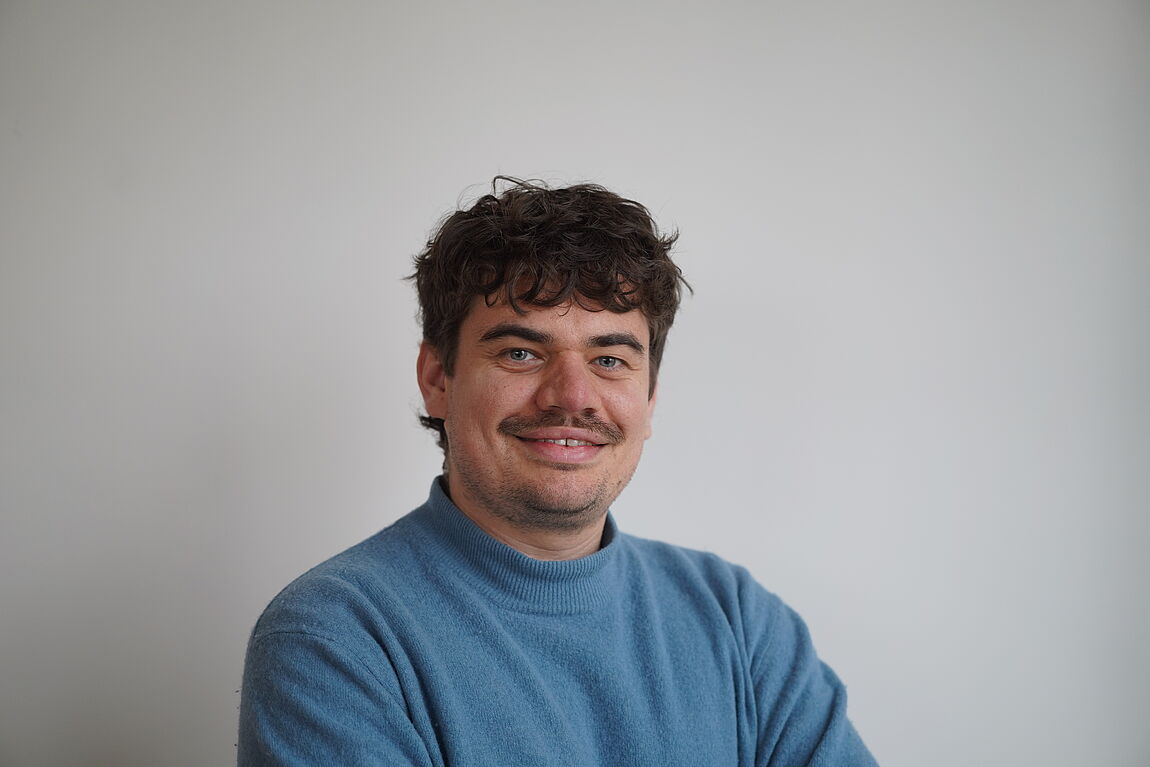


I completed my engineering degree in computer science at ENSEEIHT in Toulouse, followed by a Master 2 in data science at the mathematics department of the University of Padova. During my master's, I had my first contact with ITI HealthTech which funded my master thesis. I then returned to Strasbourg, where I was awarded a PhD grant from the ITI.
My PhD thesis investigated a historical and well-known problem in machine learning: what is called the curse of generalization. To make it simpler, if you train a neural network to detect brain tumors on MRI scans acquired at the Strasbourg hospital, and then ask the same neural network to detect tumors on MRIs acquired at a German hospital, its performance will degrade significantly. Why? Because the MRI acquisition settings differ between countries and hospitals. Thus, even if a German and a French scan would look similar to the human eye, the neural network will be lost. This issue arises because of a concept called covariate shift.
My thesis notably brought new theoretical insights regarding the link between covariate shift and modern machine learning methods such as diffusion models (the models that power today's image and video generation tools available on the internet). These theoretical insights were recognized with the best student paper award at the international conference ICASSP in 2025. Beyond the theoretical side, I developed applied methods (all my code is open source on GitHub) for biologists, bringing those theoretical insights to life and enabling them to build more generalizable neural networks to analyze their images.
Where am I now?
I am currently a postdoctoral researcher at the Vrije Universiteit Brussels in Belgium, where I work on the ERC IONIAN project (https://cordis.europa.eu/project/id/101171240), a Consolidator Grant from the European Research Council, with Prof. Nikos Deligiannis. This project focuses on autonomous driving, and more precisely on enabling cars to communicate with each other to enhance their autonomous capabilities. It sits at the crossroads of information theory and computer vision. I work myself on the computer vision side, which consists of point cloud, image, and video processing. I find it very exciting to work in such a multidisciplinary team, especially on a fresh new project that just launched in September 2025... Stay tuned!